
Training and Workshops
I offer training and workshops on relational practice, trauma, and complex grief
I am available for in-house, tailored training for your team or organisation
Upcoming Training
Cognitive Analytic Therapy (CAT):
Introductory Training
Training Dates:
Forest Lodge / Glebe
Birchtree Centre, 58 Parramatta Road
18th September— Full-Day
25th September— Half-Day (optional)
Campbelltown
Campbelltown Performing Arts High School
2nd October— Full-Day
9th October — Half-Day (optional)
In this two-day training, participants will:
Develop a relational lens to understand and work with clients
Learn the process of reformulation
Practise mapping clients' relational patterns, and
Explore transference, countertransference, and how the therapeutic relationship can support change
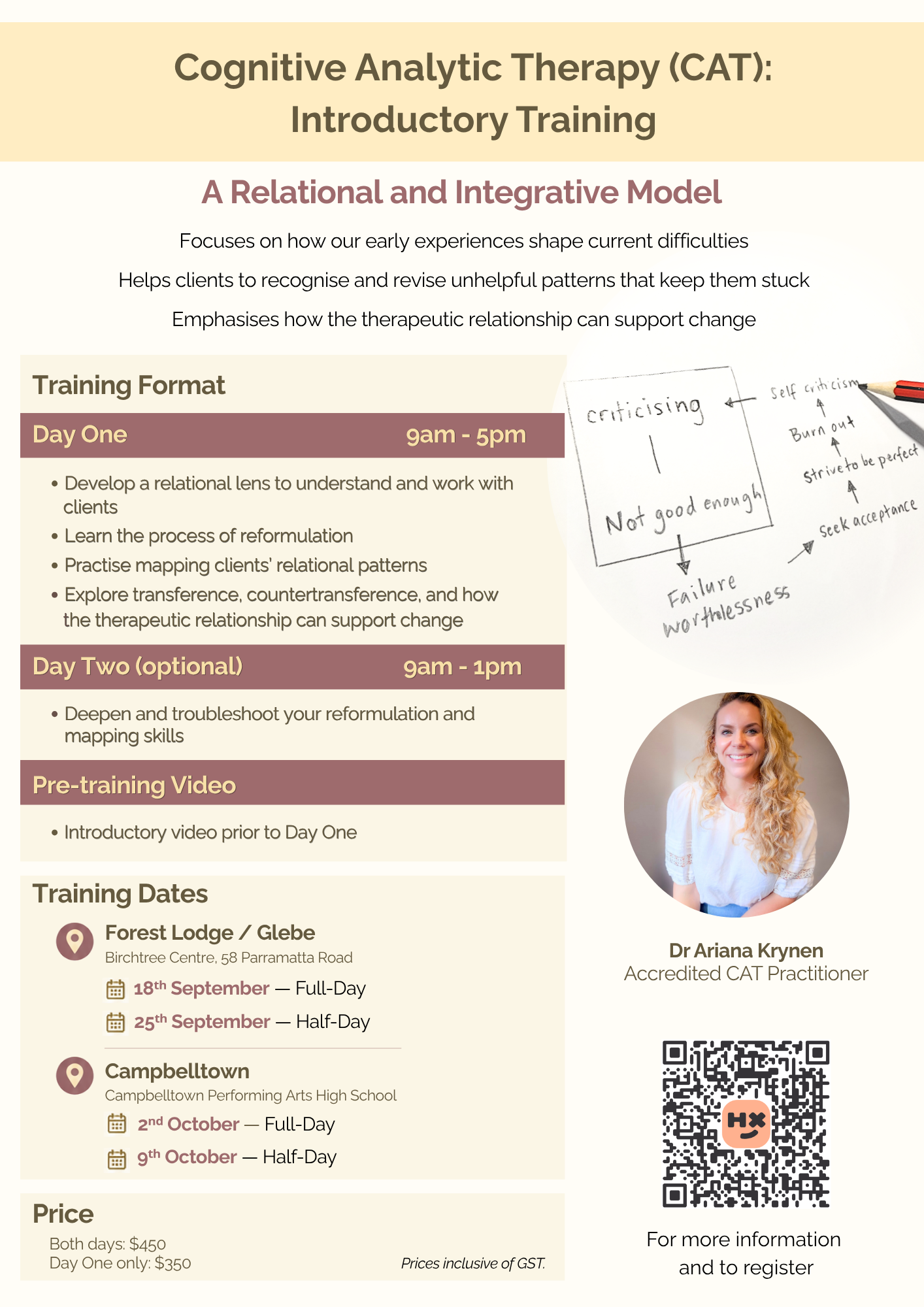
Relational & Integrative
Focuses on how early experiences shape current difficulties
Therapeutic relationship supports change
Cognitive Analytic Therapy (CAT)
Cognitive Analytic Therapy (CAT) is a time-limited, relational, and integrative model for understanding and working with relationship and behavioural patterns that keep clients stuck.
CAT integrates psychoanalytic (specifically object relations), cognitive-behavioural, developmental, and personal construct theories into a unified, practical framework.
Widely established in the UK for 40 years, CAT is an effective therapy for a wide range of difficulties including anxiety, depression, trauma, eating disorders, adjustment to life events, and complex interpersonal difficulties.
CAT’s hallmark feature is the process of reformulation, which helps clients to recognise and revise unhelpful and self-limiting patterns, and understand how these patterns stem from early relationship experiences.
CAT places strong emphasis on the therapist-client relationship, using concepts of transference and countertransference in the process of change.
Why train in CAT?
Help clients understand how their past relationships influence present ones, as well as behaviours & ways of coping that may leave them feeling stuck.
❋ Build Relational Awareness
❋ Collaborative, Rich Formulations
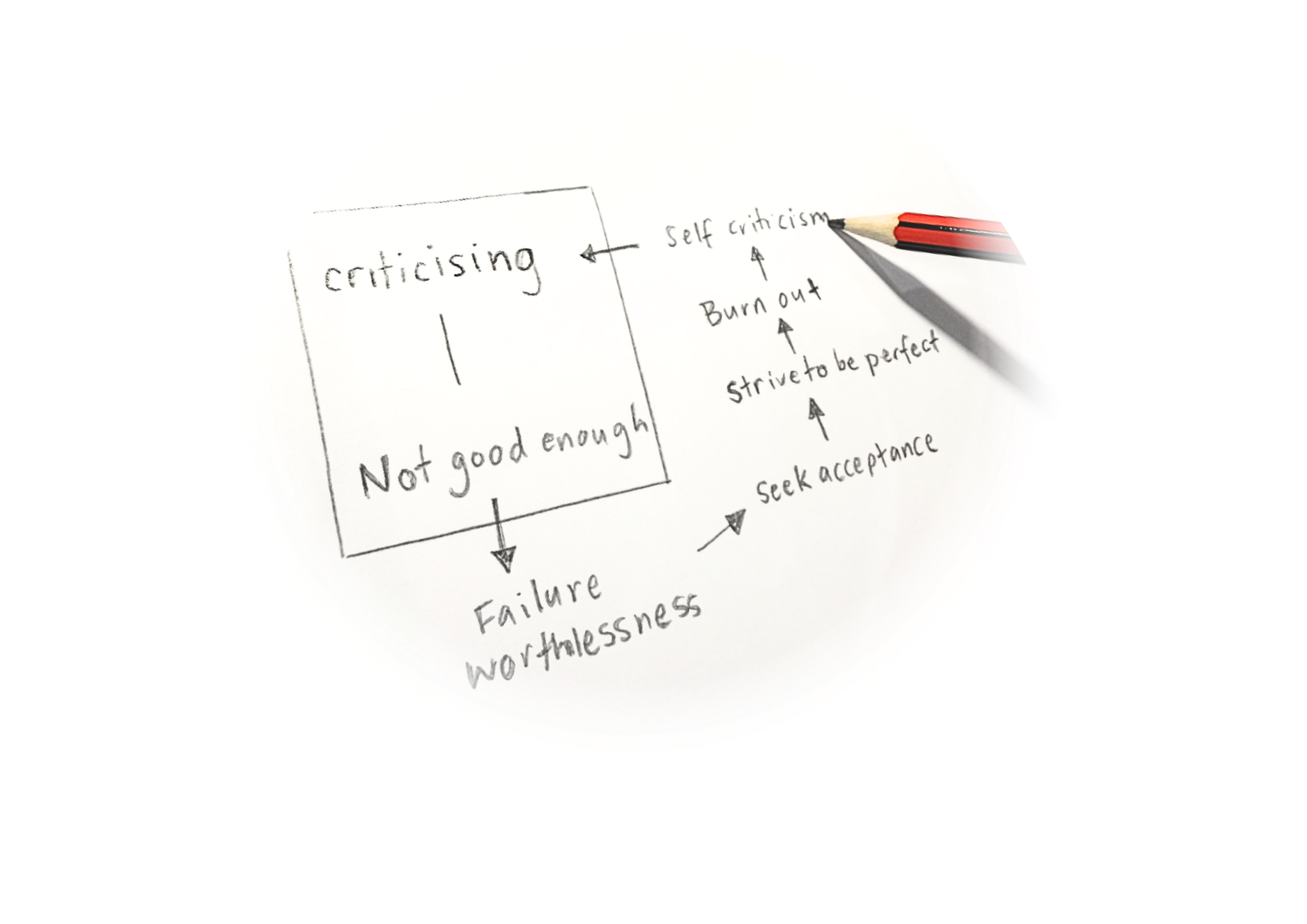
Create visual maps of relational patterns & coping strategies, helping clients gain insight into how these patterns repeat in life & therapy.
❋ Navigate Therapy Relational Dynamics

Learn a framework for managing transference, countertransference & therapeutic ruptures.
❋ Equip Clients with Practical Tools
Support clients to find exits from unhelpful patterns & develop healthier ways of relating to themselves & others.
❋ Versatile, Transdiagnostic Model
CAT can be used to support a wide range of challenges, including anxiety, depression, trauma, eating disorders, adjustment to life events, & complex interpersonal difficulties.
❋ Flexible, Creative and Integrative
CAT incorporates other therapeutic modalities so therapy can be tailored to individual client needs.
❋ Beyond Individual Therapy
CAT can be applied in work with couples, groups, & teams to better understand relational systems.

Contact
Get in touch to enquire about supervision, consultation, training or workshop options.
I am not taking on new therapy clients at this time.